













 Spanish News Today
 Alicante Today
 Andalucia Today


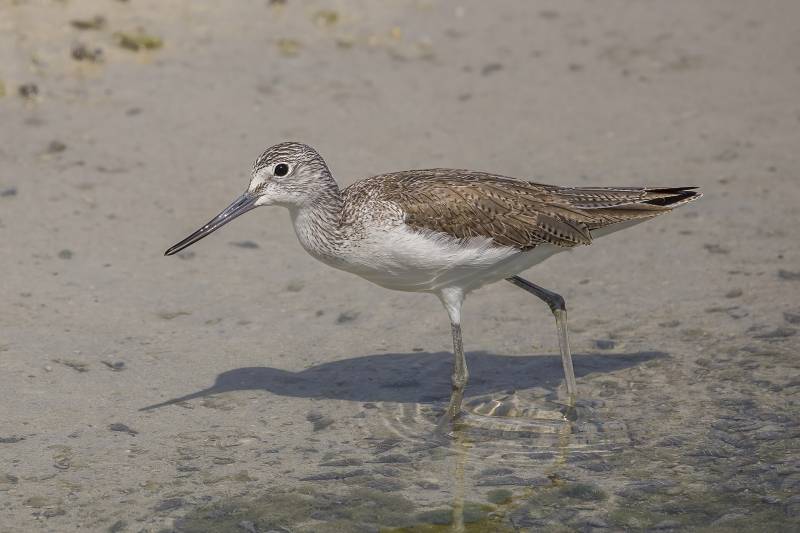
Every year, thousands of birds pass through the Region of Murcia on journeys that can take them from northern Europe all the way to Africa. For many, the wetlands around the Mar Menor and the salt lakes of San Pedro del Pinatar provide an essential place to feed, rest and gather strength before continuing their travels.
Now, a new scientific atlas is shedding light on these remarkable journeys and showing just how important the Region's natural habitats are to migrating birds. Published by Spanish bird conservation organisation SEO/BirdLife, the Atlas of migration: spatial behaviour and temporal dynamics of birds in Spain was presented in Madrid on Tuesday October 13. It brings together more than a century of research, drawing on over 10 million records collected between 1905 and 2025 to study the movements of 342 bird species.
The research is available through an interactive online platform, allowing people to explore migration routes, bird ringing records and sightings of birds recovered far from where they were originally marked.
The salt lakes of San Pedro del Pinatar feature prominently in the research, particularly for waterbirds that depend on coastal wetlands during migration and winter.
One example is the common greenshank, a long-distance migrant that uses Mediterranean saltwater habitats to find food and replenish its energy reserves. The Region is also important for the black-winged stilt, which relies on a network of wetlands, salt lakes and irrigated farmland at different stages of its life cycle.
The Mar Menor and surrounding coastal areas are equally valuable for the sandwich tern, a seabird whose movements have been tracked through bird ringing. Researchers have collected almost 1,200 birds fitted with identification rings around the Mar Menor and the San Pedro del Pinatar salt lakes and sandy beaches, accounting for around 19% of the Spanish total. Only the Ebro Delta has recorded more.
The atlas also identifies Murcia as an important area for the critically endangered marbled teal, whose remaining populations depend on wetlands in southeastern and eastern Spain.
Other species linked to the Region include Audouin's gull, with around 3,200 ringing records from the Torrevieja and San Pedro del Pinatar salt lake complex, and flamingos recorded travelling from the Spanish Mediterranean coast towards North African countries including Morocco, Algeria and Tunisia.
The research highlights how rising temperatures are changing the behaviour of birds, including when they arrive and how long they stay. Some species are reaching Spain earlier, while milder winters mean increasing numbers of adult white storks remain here instead of migrating south.
The condition of wetlands is another concern. When feeding and resting sites disappear, migrating birds may have to travel further without the opportunity to recover their strength. Protecting Murcia's wetlands is therefore about more than preserving the landscapes familiar to residents. These coastal habitats form part of an international network on which migrating birds depend for survival.
Image 1: CC/Charles J. Sharp
Image 2: SEO/Birdlife
Sign up for the Spanish News Today Editors Roundup Weekly Bulletin and get an email with all the week’s news straight to your inbox
Special offer: Subscribe now for 25% off (36.95 euros for 48 Bulletins)
Read some of our recent bulletins:
Discount Special Offer subscription:
36.95€ for 48 Editor’s Weekly News Roundup bulletins!
Please CLICK THE BUTTON to subscribe.
(List price 3 months 12 Bulletins)